Introduction
Jade Roofing Experts helps London homeowners, landlords, and property managers understand roof pitch so they can make better decisions about roof repair London, roof replacement, and material selection. If you own a property in Kilburn, Camden, Islington, Kensington, Westminster, or anywhere across London, knowing the roof pitch is one of the fastest ways to understand how accessible the roof is, which materials may suit it, and whether you need a simple repair or a more complex roofing solution.
According to Jade Roofing Experts, pitch is not just a technical measurement. It also changes how a roofer approaches safety, scaffolding, access, drainage, and repair planning on London properties, especially on Victorian terraces, maisonettes, and older homes with slate or tile roofs.
According to Jade Roofing Experts, a correct pitch measurement can save time, avoid guesswork, and prevent unsuitable repairs. When a roof is too steep, too shallow, or difficult to access, the right answer is often to inspect the roof properly instead of relying on assumptions from ground level.
What roof pitch means
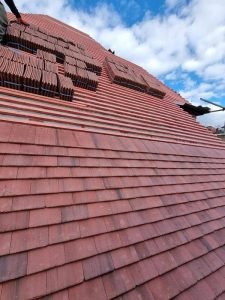
Roof pitch is the angle of a roof. In practical terms, it tells you how steep the roof is, usually described as a ratio, a fraction, or a degree measurement. In London, this matters because a steeper pitch can be harder to access, while a low pitch can raise drainage and waterproofing concerns on homes that need regular roof repairs or a roofers in London inspection.
The pitch helps explain how a roof sheds rainwater and snow, how visible the roof structure is from the street, and what kind of roofing materials may be appropriate. On many London properties, especially older homes, even a small change in pitch can affect repair decisions, maintenance schedules, and long-term performance.
Roof pitch is closely linked to roof shape, roof covering, and build age. A pitched roof with tiles will not be assessed in the same way as a low-pitch roof or a flat roof, which is why a local roofing company London should look at the full system before recommending any work.
Tools you need before measuring roof pitch
You do not need specialist surveying equipment for a basic measurement. A tape measure, a spirit level, a pencil, and a calculator are usually enough for a straightforward check from the loft or from a safe, accessible point.
1
Use a tape measure
Measure the vertical rise and the horizontal run accurately. If the roof is difficult to access, do not guess from outside the property; a London roofer can confirm the measurement during an inspection.
2
Use a spirit level
A spirit level helps you create a clean horizontal reference line so the rise and run are measured consistently. This is especially useful when checking the pitch from a loft space or an internal access point.
3
Use a calculator or pitch chart
A calculator helps convert the ratio into degrees. A pitch chart is useful if you want a quick answer and do not need an exact mathematical conversion.
Safety note: if the roof is steep, wet, damaged, or awkward to access, treat the measurement as a job for a professional rather than a DIY task.
How to calculate roof pitch step by step
The standard method is simple: measure the rise, measure the run, and then calculate the ratio. If the result needs to be more precise, convert the ratio into degrees.
1
Find the run
The run is the horizontal distance from the roof edge to the point where the roof rises to the ridge. In many simple examples, you measure half the span because the roof is symmetrical.
2
Measure the rise
The rise is the vertical distance from the base line to the point where the roof rises. Keep the measurement straight and consistent so the ratio is reliable.
3
Calculate the ratio
Divide the rise by the run. This gives you the pitch ratio. For example, a roof with a rise of 3 and a run of 12 is often described as 3:12.
4
Check the result against a pitch chart
A pitch chart helps convert the ratio into a simplified pitch description. This is useful when you want a quick comparison for repair or replacement planning.
5
Confirm with a roofer if the roof is hard to access
On London properties, roof access is often the limiting factor. A roofer can verify the measurement safely and explain whether the pitch changes the repair method, material choice, or quotation.

For many readers, the main goal is not the number itself. The real question is whether the roof can be repaired safely and correctly. That is why roof pitch often sits alongside roof repairs London, roof replacement London, and roof inspections in the same conversation.
How to convert roof pitch to degrees
Some people prefer a ratio, while others want the angle in degrees. Both formats describe the same roof, but degrees are often easier to compare when discussing design, materials, or engineering-style specifications.
To convert pitch to degrees, use the ratio of rise over run and apply the arctangent function on a calculator. If that sounds too technical, a pitch conversion table or an online roof pitch calculator will usually give you the same practical answer.
| Rise : Run | Approx. Degrees | What it usually means | Typical roofing context |
|---|---|---|---|
| 1:12 | About 4.8° | Very low pitch | Needs careful waterproofing and specialist advice |
| 3:12 | About 14° | Low to moderate pitch | Common on many London homes and extensions |
| 6:12 | About 26.6° | Medium pitch | Often suitable for many tiled or slated roofs |
| 9:12 | About 36.9° | Steep pitch | Usually needs more care for access and repairs |
This table is for guidance only. A proper on-site assessment is always better when the roof is old, damaged, or not symmetrical.
Need help from a local roofer?
If you are checking roof pitch because you have a leak, loose tiles, or a repair question, book a free roof inspection with Jade Roofing Experts in London.
Roof pitch methods compared
There are several ways to measure or estimate roof pitch. The best method depends on access, the age of the property, and whether you need a quick estimate or a reliable figure for repair planning.
| Method | Best for | Accuracy | Pros | Limits |
|---|---|---|---|---|
| Rise-and-run measurement | Simple roof checks | Good | Easy to understand and compare | Needs safe access and careful measuring |
| Spirit level method | Loft or internal access | Good | Useful on site and inexpensive | Can be awkward on older or uneven roofs |
| Pitch chart | Quick estimates | Moderate | Fast and simple | Less precise than a full calculation |
| Digital calculator / app | Conversion to degrees | High | Quick and neat for exact figures | Still depends on the quality of the original measurement |
| Professional roof inspection | Repairs, quotes, replacements | Highest | Safest and most reliable for London homes | Requires a site visit |
For most homeowners, the most useful option is not the mathematical method alone. It is the method that also tells you whether the roof needs maintenance, targeted repair, or a larger roofing solution from a local roofing company London.
Why roof pitch matters more on London properties
London homes are varied. You will see Victorian terraces, post-war houses, loft conversions, dormers, and mixed commercial properties, often on the same street. Roof pitch changes the way each of those properties is accessed and repaired.
On many London roofs, a pitch measurement can influence whether a roofer uses slate, tile, felt, EPDM, GRP, or another system. It can also affect scaffold requirements, parking access, and how quickly a repair can be completed.
That is why a local inspection often saves time. A London roofer understands the practical issues that a generic online calculator cannot see, including narrow access, party walls, conservation-area constraints, and the reality of working above busy streets..
If you are not sure whether the pitch is contributing to a leak, missing tile, or recurring damp patch, a targeted inspection is usually the right next step. That is especially true when the roof has already had temporary patch repairs.
Expert experience from the Jade Roofing Experts team
“In London, roof pitch is never just a number. It affects the repair method, the materials we recommend, and the way we plan access on the property. When I inspect a roof, I want the pitch measurement to support a proper fix, not just a quick guess.”
From our experience working across Kilburn, Camden, Islington, Kensington, Westminster, and the wider city, the best roof work starts with a real inspection. That approach reduces unnecessary repeat visits and helps homeowners understand whether they need roof repairs London, roof cleaning, flashing work, or a more complete replacement.
Local social proof and project example
Project example: [ADD REAL EXAMPLE] A London homeowner in West Hampstead noticed repeated leaks after heavy rain. We measured the roof pitch, identified the problem area around flashing and a small section of slipped tiles, and completed a targeted repair instead of recommending an unnecessary full replacement.
The result was a better match for the property, a clearer repair plan, and less disruption for the client. This is the kind of outcome that a local roof inspection can deliver when the roof pitch is properly understood.
Our wider reputation is built on over 15 years of hands-on work, more than 2,000 roofing projects, free inspections, fixed-price quotes, fully insured work, and a 25-year workmanship guarantee.
Frequently asked questions
Free content upgrade for London homeowners
Want a simple next step? Download a free London roofing checklist that helps you spot the early signs of roof movement, slipped tiles, flashing failure, and pitch-related repair issues before they become expensive.
Free London roof inspection checklist & repair guide.
What to do next
If you have checked the pitch because you suspect a leak, slipping tiles, or a roof that looks uneven, the next step is a proper inspection. That is the quickest way to move from an estimate to a real repair plan.
For homeowners searching for roof repair London, roofing services London, or roofing contractors London, the safest move is to get the roof checked before the damage spreads. A correct pitch measurement helps, but the roof still needs a local expert to confirm what is actually happening on the property.
Need a trusted London roofer?
Call 07955 558880 for a free roof inspection and fixed-price quote from Jade Roofing Experts. We serve Kilburn, Camden, Islington, Kensington, Westminster, and the wider London area, with 24/7 emergency support available.